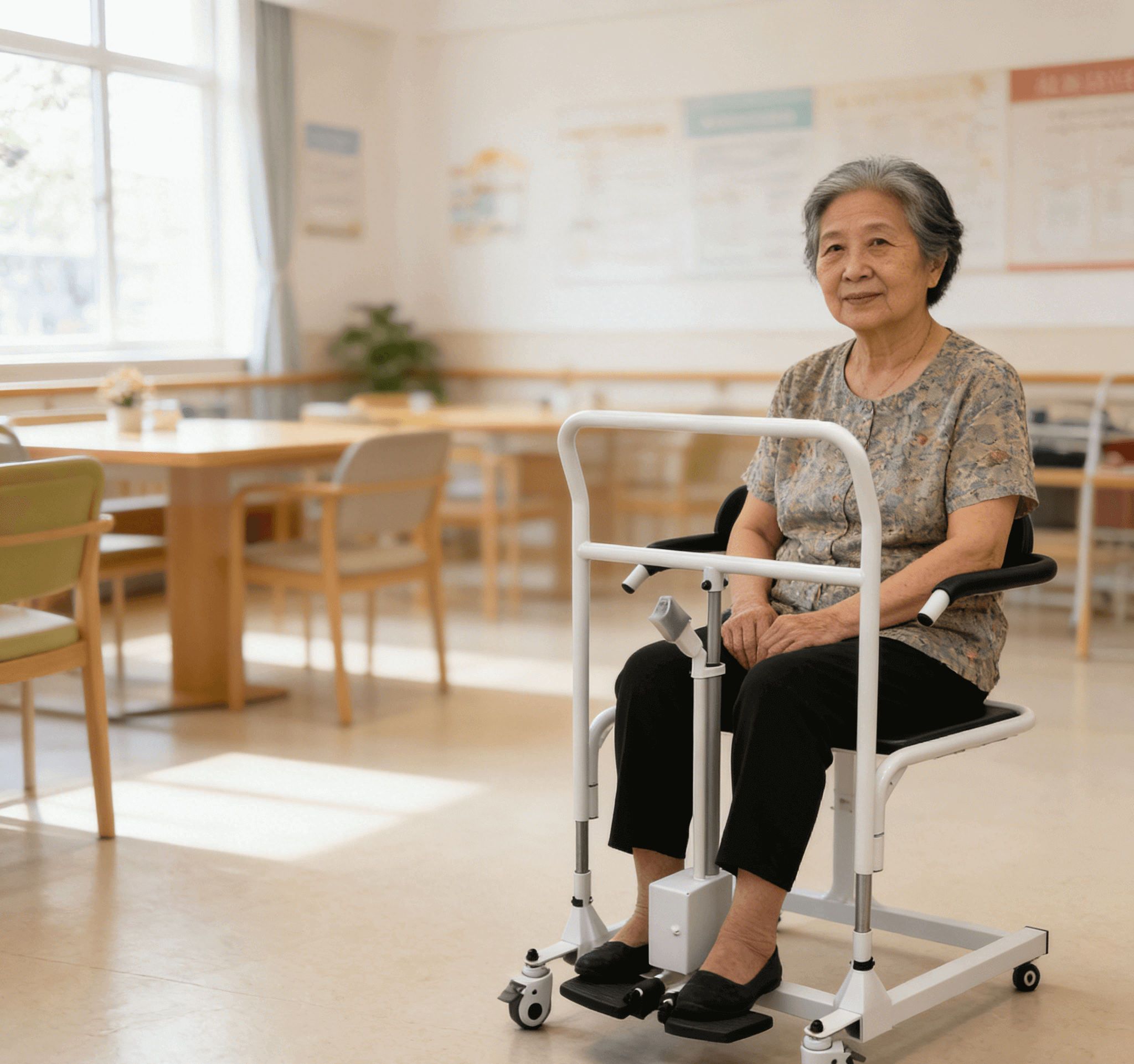
Category: power lift chairs
Posted by 2025-12-23 11:12
hoyer lift for rental
The Complete Guide to Hoyer Lift Rental: Flexibly Meeting Care Needs and Reducing Financial Burden
When families face short-term or temporary care needs, purchasing a Hoyer Lift may not be the best option. Rental offers a flexible and cost-effective solution. Whether for post-surgery rehabilitation, short-term injuries/illnesses, or trying out the equipment before buying, renting allows you to quickly access professional care support at a lower cost.
I. When Is the Best Time to Consider Renting a Hoyer Lift?
Short-term rehabilitation (most common): For procedures like hip/knee replacement or back surgery, which have a clear rehabilitation period (usually 3–6 months).
Trial experience: If you’re unsure which model is most suitable, rent it for a "trial period" first before deciding whether to buy and which model to choose.
Financial considerations: Limited upfront budget that can’t cover the one-time cost of purchasing.
Responding to emergencies: A family member suddenly falls ill or gets injured, requiring immediate access to the equipment.
Space constraints: Living space is small, making long-term storage of large equipment inconvenient.
II. The Four-Step Rental Process
Step 1: Find Reliable Rental Channels
Local medical equipment suppliers: This is the most recommended channel. Search for "medical equipment rental," "durable medical equipment suppliers," or "patient lift rental" plus the name of your city.
Medical institution referrals: Consult hospital discharge planners, occupational therapists, or physical therapists. They have information about reputable local suppliers and can provide professional advice on model selection.
Online search and price comparison: Find multiple suppliers via the internet, conduct initial phone consultations, and compare prices.
Step 2: Clarify Needs and Obtain Quotes
When contacting suppliers, prepare the following information to get an accurate quote:
Rental duration: How long do you expect to rent the equipment? (Typically calculated on a monthly basis.)
Equipment type: Do you need a manual hydraulic model or a more labor-saving electric model?
User information: The user’s weight and height, as well as the main transfer scenarios (e.g., bed-to-wheelchair, toileting, etc.).
Ask for a detailed cost breakdown:
What is the monthly rental fee?
Are there fees for door-to-door delivery, installation, and operation training? (This service is crucial.)
Is there a one-time equipment setup fee?
What is the deposit amount?
Does the rental fee include subsequent maintenance and repair for malfunctions?
Step 3: Handle Medical Insurance and Documentation
Medical insurance reimbursement: If the rental is "medically necessary" (requiring a doctor’s prescription), part of the cost may be covered by medical insurance, commercial insurance, or long-term care insurance.
Be sure to confirm with the supplier whether they accept your insurance plan.
Understand the reimbursement ratio and out-of-pocket amount.
Carefully review the contract: Before signing, thoroughly read the rental contract, focusing on terms such as the rental period, renewal/early termination policies, and liability for damage.
Step 4: Receive the Equipment and Undergo Training
Professional delivery: Request door-to-door delivery from the supplier.
Mandatory on-site training: This is key to ensuring safety! Ask the delivery staff to provide on-site operation training for all caregivers, including proper sling application, lifting, moving, and equipment cleaning. Never use the equipment without receiving training.
Inspect the equipment: When receiving the equipment, check for existing damage or wear together with the delivery staff, and take photos for record to avoid disputes when returning the equipment.
III. Rental vs. Purchase: How to Decide?
Aspect Rental Purchase
Upfront cost Low, paid monthly with no large one-time expenditure. High, requiring a one-time investment of several thousand yuan.
Long-term cost If rented for too long (e.g., over a year), the total cost may be close to or even exceed the purchase price. More economical, with one-time investment for long-term use.
Flexibility High; the equipment can be returned once needs are met, no hassle of equipment disposal. Low; the equipment is permanently owned and may be left idle.
Maintenance & repair Responsibility usually lies with the supplier, included in the rental fee—hassle-free. Responsibility lies with the user, who needs to arrange and pay for repairs independently.
Equipment ownership Only has the right to use; the equipment must be returned when the rental period ends. Permanent ownership, available for use at any time.
Best scenarios Short-term, temporary use, trial, or tight budget. Long-term, permanent, or high-frequency use.
IV. 5 Key Questions to Ask When Renting
"If the equipment malfunctions during use, what is your response process? How soon can you send a backup device?"
"What policies apply if I need to extend or terminate the rental early? Will there be a penalty fee?"
"Which type of sling is included in the rental fee? If we need to switch to another style (e.g., a commode/shower sling), how is the cost calculated?"
"Can you demonstrate on-site and guide us through a complete transfer from bed to wheelchair?"
"What are the cleaning standards when returning the equipment?"
V. Important Safety Tips
No compromises on safety: Don’t relax safety checks just because the equipment is rented. Before each use, always inspect the sling, hooks, and equipment stability.
Specialized slings: Only use slings provided or recommended by the supplier that are compatible with the equipment model. Never mix incompatible accessories.
Keep records: Properly store the rental contract and the supplier’s contact information. Communicate promptly if any issues arise.
Conclusion
Renting a Hoyer Lift is a wise and efficient choice. It helps families navigate special periods smoothly, ensuring care safety while alleviating financial pressure. The key to success lies in choosing a formal supplier with comprehensive services, professional training, and support. Through adequate preparation and clear communication, the rental experience can be seamless and safe, providing crucial support for you and your family.